
Why is my water heater leaking from the bottom
A puddle under your tank usually means a failed drain valve, a loose fitting, or a cracked tank. Here is how to tell them apart, safely.
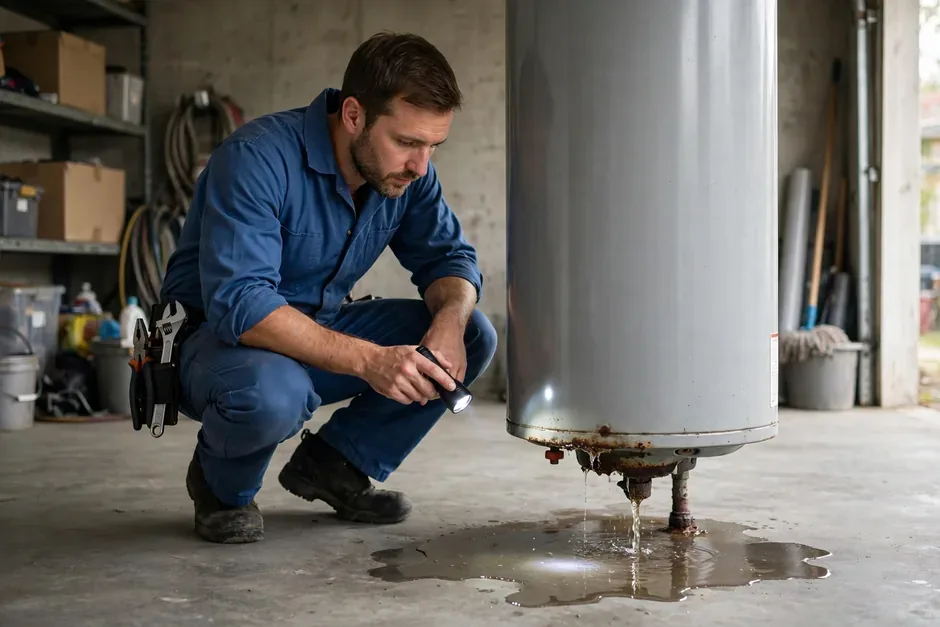
A puddle under a water heater is one of those problems where the first job is not the repair, it is telling the causes apart. A drain valve drip, a loose fitting, condensation, and a cracked tank all pool in the same place, and each one means something different. This post works through them safely, in the order to check.
First: make it safe, then look
If water is near the burner, pilot, or electrical connections, do not reach through it. For a gas heater, turn the gas control to pilot or off if you can do so without stepping in water, and for an electric heater, switch off the breaker if the panel is dry and reachable. Turn off the cold-water supply to the heater if the leak is steady. Mop up only what is safe to reach, and take a photo of where the water is coming from: the drain valve, a fitting, the base seam, or the relief valve discharge pipe. That photo is the most useful thing you can give a plumber.
Drain valve drips
The drain valve at the base of the tank is the most common bottom leak, and often the simplest. Sediment, a worn washer, or a valve that was opened for flushing and never fully reseated will drip steadily. A drip that follows a recent flush points here first. Tightening, reseating, or replacing the valve is the fix, and the valve's condition is part of any heater service. Note whether the drip is steady or only after heating cycles: that pattern helps separate a valve drip from tank failure.
Fittings and connections
Cold and hot connections, the relief valve, and the relief discharge pipe all sit near the tank, and a leak from any of them can run down the tank and pool at the base. A leak that appears at the top fittings and tracks downward is not a bottom leak at all, even though the puddle sits at the bottom. Check the top connections, the relief valve, and the discharge pipe before concluding the tank has failed. On North Broadway garage installs, where heaters sit in garages with different venting and strapping questions, the same check applies, with the garage floor drain and slope noted as part of the picture.
Tank failure, and how to recognise it
A tank that has corroded through leaks from the base seam or the tank body itself, and that leak does not stop when fittings are tightened. Rusty water, a tank that is old relative to its household, and a leak that returns after valve and fitting work all point toward tank failure. A failed tank is a replacement job, not a repair, because a corroded tank cannot be patched back to sound condition. Water heater repair in Escondido covers the diagnosis, and water heater installation in Escondido covers replacement, including venting, strapping, and permit checks for the scope.
Condensation, the false alarm
A new or recently installed heater, or a heater in a humid garage, can show condensation that looks like a leak. Condensation appears as light moisture without a steady drip source, and it clears as the tank reaches temperature. If the moisture has a steady drip, a rust stain, or a growing puddle, treat it as a leak, not condensation.
Frequently Asked Questions
Is a leaking water heater an emergency?
A steady leak, water near electrics or a burner, or a leak that is growing should be treated as urgent. Turn off the supply if you can do so safely, keep clear of water near electrics, and call.
Can a drain valve leak be repaired?
Often, yes. A drain valve drip from sediment, a worn washer, or a valve that never reseated after flushing is a valve repair or replacement, not a tank replacement.
How do I know the tank itself has failed?
A leak from the base seam or tank body that persists after valve and fitting work, especially with rusty water, points to tank failure. A failed tank is replaced, not patched.
Is condensation the same as a leak?
No. Condensation is light moisture that clears as the tank reaches temperature, with no steady drip source. A steady drip, rust stain, or growing puddle is a leak.
What should I tell the plumber when I call?
Where the water appears to come from, whether it is steady or intermittent, whether the water is rusty, and whether the heater is gas or electric and where it sits.